CHOQUEQUIRAO
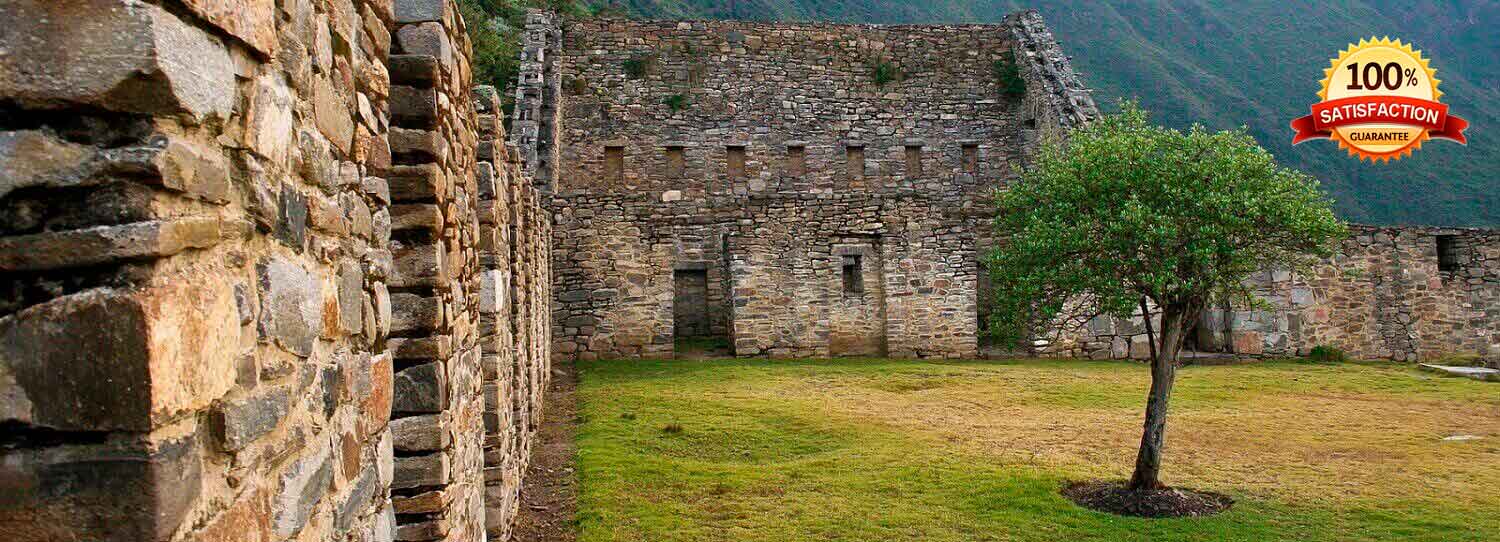
Choquequirao is in Sacred Valley of the Incas of Peru. Choquequirao Complex is a 4- to 5-day trek in the Cusco area and an alternative and less tread trek than the crowded Inca trail and Salktantay routes. Choquequiraw is situated in the spur of the mountain range of Salkantay, over 3030m surrounded by the Apus of Yamana, Ampay, Chokecarpu, Pumasiyo and Panta, on the left bankof Apurimac river. In the time of the Incas, it was united and in communication with Machu Picchu by a complex network of trails. The reasons are many: The fantastic nature with valleys, snow-capped mountains and great variety of plants, birds and animals.


It's a two day hike to
Choquequirao from
Cachora or Huanipaca. Guides and mules for the trip are best arranged in Cachora. Cachora is the most popular starting point for travelers who want to see the amazing newly-rediscovered Incan site, Choquequirao. Most people go in and out from Cachora as this is the best maintained and serviced trail. There are several places to buy water, Inca Kola and simple dishes of soup, eggs or potatoes along the journey. Another option is to continue onto
Santa Teresa (La Convención) or
Machu Picchu, but you'll need plenty of food. Hiring a donkey or mule is advised.
There are generally only a few tourists each day entering
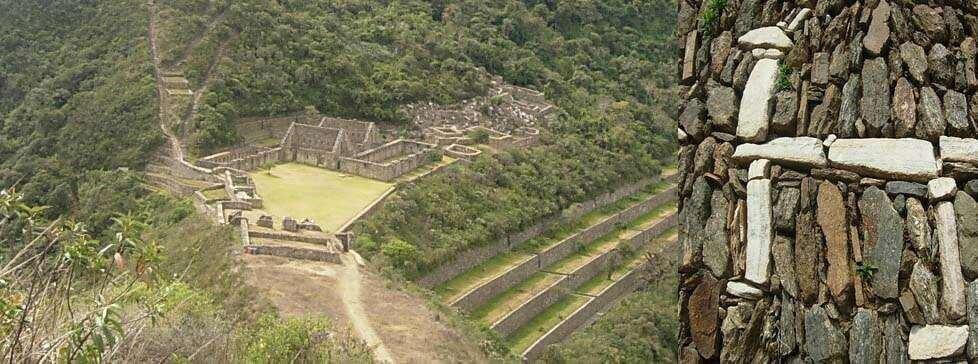
Choquequirao. The park itself is quite difficult to navigate with some paths somewhat overgrown. Much of the site is rebuilt: many original large stones have crumbled into smaller pieces, and in places it is easy to identify which sections are original work and which are reconstructed. In the main plaza, concrete beams have been used on one of the buildings. In other places, crumbling ruins are marked with numbers, so if they should fall, they will be able to be reconstructed.
Due to the altitude, it's hot in the sun and cold at night, sometimes below 0°C. The air is dry on north side of the mountains, humid on the south sides and in cloud forest.
There used to be three trails leading to
Choquequirao, one from
Cachora, Huanipaca and one from Yanama. Currently Huanipaca trail is closed due to rockfall (as of August 2013, still closed March 2014). To reach Cachora or Huanipaca, take the bus from
Cusco to Abancay (as of March 2016 buses leave around 8am, 10am and 1pm) and get off at Ramal - the turn off for Cachora or Huanipaca (just past Saywite), the road leading to Cachora is a 40-minute ride in colectivo. There are many bus companies that leave for Abancay from Cusco's Terminal Terrestre, but timetables are not usually online. As of March 2014 Breddes buses leave at 5:00am, 6:00am, 10:00am, 1:00pm and 8:00pm (20 soles). Another company (the name not remembered), does the route for 15 soles. Get off the bus at Ramal (de Cachora), and from there you need to take a taxi or walk down the switchback roads or paths cutting directly down the hill from the main road to the town you intend to hike from. Taxis often wait for the people from the bus, except on Sunday when you might have to wait an hour. A shared ride from Ramal to Cachora costs around 10 soles. A private taxi will cost 30 soles.
An alternative to taking a bus is to take a colectivo from Cusco all the way to Cachora. The ride costs 40 soles per seat. You can wait until the car is full to split the cost or pay a (negotiated) 150 soles to hire the car as a taxi from Cusco to the main plaza of Cachora from where the trek starts. Official colectivo companies are about 10 minutes by taxi from the airport on the way to Cusco city center. Just grab a taxi on the street outside the airport for 6 soles and they'll drop you off where the colectivos wait.
For the Huanipaca and Yamana trails, steep sections make hiking the only option, but the trail from Cachora can be done either on foot or horseback. If you speak a bit of Spanish you should have no trouble finding an arriero and one or more mules or horses in Cachora. Just ask your taxi driver when you get a lift in, or ask at any of the shops in the main Plaza del Armas. Expect to pay 50 soles per day for an arriero, and 40 soles per day per horse. The price can be negotiated and has gone up due to the increase of popularity of the trek. A woman named Doris who lives in Cachora owns between 30-40 mules and she rents them to both organized groups and individual hikers. A minimum of 4 days hire is applicable. Renting a mule for your pack is highly recommended, as the trek is very steep both down and up from the valley. Tips for arrieros aren't necessarily expected but much appreciated if you are satisfied with their service. Plan to provide a meal or two to your arriero as well, and inviting the arriero to an inka-cola or beer is also much appreciated. Again, considering their attention and service.
The trail from Huanipaca is shorter, steeper and lacks the amenities that the trail from Cachora offers. As of August 2013 Huanipaca trail is closed due to rockfall.
The trail from Cachora has several sources of drinkable water, campsites, showers, toilets and several shops where you can buy soft drinks, water, beer and small snacks like crackers or cookies. Hiking in from Yanama you would need to start in Mollepata, Santa Teresa or Machu Picchu Pueblo, these are very long and difficult hikes. If you want to do the 8 day Machu Picchu - Cachora hike it is probably easier to do it in reverse as you will find arrieros much more easily and cheaply in Cachora than at the Machu Picchu end. Note that in either case you will probably need to pay for a return journey for the arriero and mule hire, not just the one way.
The Two Day Trek From Cachora
Day One - Start out early from Cachora (5am or earlier) to make it to camp before nightfall and to avoid the heat. The further down in the valley you get, the hotter it becomes. Don't be fooled by the fresh cool air up top. The heat is a serious factor on the first day, so take it into consideration. The shadow starts to cover the dry side of the mountain around 3pm. Some people choose to hike the first day down at night to avoid the heat. But consider if it has rained in the last days and if it is windy, as there are occasional falling rock. The first day is around a seven hour hike and 1,500 meters elevation change down the mountain. There are multiple campsites, all well marked, with running water and bathrooms. The tap water is siphoned from streams coming from lakes and glaciers on the
Choquequirao side of the Apurimac River. KM 25 Santa Rosa (Alta) camp site it is a great half way point. See sleep for descriptions of the camp sites. Some are better than others for various reasons.
Day Two - There is a new bridge across the river. Get ready for an intense hike up the other side. After 11am the sun can make this hike very difficult, with one hiker reporting a walking speed of 500 metres per hour, compared to the usual 4km per hour on relatively flat ground. About 1,800 meters up,
Choquequirao awaits. From the town at the top (Marampata), it is a flatter one hour walk to the park entrance, and another hour to the main plaza of
Choquequirao. It is possible to hike at night, when the air is much cooler; the path is easy to follow.
Note: A new bridge has been opened to cross the river, so renting mules for the whole trip is possible again. Bring a tent. It will likely rain and there are not many camping places with shelter.
Camping
You can camp near the entrance of the ruins or at several sites nearby and there are designated campsites on the way to the ruins. The main camp sites have flush toilets with doors, cold water showers, benches and a kitchen area, and nice flat grassy areas to pitch your tent. Most of them have an attendant living on site who will be your friend for the evening. There are camp sites at the following locations:
- Colmena, KM 4. Run by a friendly woman named Luiza and her brother Pedro. A great campground to get a headstart for the first day, or to rest a last day on the way out if you have time, as we did. They don't sell drinks but sell soup and lunch for 6 soles.
- Huayhuacalle, KM 11. Family selling crackers, sodas, batteries, cigarettes, etc. Just before the big descent into the river valley. You can also camp on their land if you like, but there is no shower/toilet available here.
If you are here at around 9 a.m. on the way back you may be lucky to get a lift directly back to Cuzco with one of the tour vans dropping off customers for just 20 soles a person.
- Chiquisca, KM 19. Most tour groups stop here for the first night. But it's the least attractive of the camp sites. The many tour group mules leaves a fecal mess in front, and the horse flies are a real nuisance. The owner doesn't look after the grounds well (trash was everywhere), and our arriero said she charges for everything, including using the bathroom even as a paying camper. The air is stagnant at this site, and views are minimal. Best be avoided if you want a more authentic stay. Simple cooked food, snacks and drinks can be bought here. Cooked food (3 soles was acceptable for soup at lunch, containing rice, tomatoes, onions, and seasoning. Purchased cooked eggs and rice for an additional 5 soles.
- Playa Rosalina, KM 21. A nice enough looking site at the very bottom of the valley just before crossing the river. They have built pits to start a fire and the ground is level but dusty. The groups of night hikers set up camp here in the late evening. Most individual hikers carry onward to make a few more KMs before the great ascent the next day. Cerveza's available here for 10 soles / bottle (Cristal) as well as other soft drinks and water.
- Alfonso, KM 22. A family (owner Alfonso), is starting a new camp site just 25 minutes uphill after crossing the river. A great alternative to Santa Rosa coming in or out, particularly going out. They sell soft drinks, water and beer and are happy to let you use their kitchen utensils and wood fire to cook. As they're just starting up, however, showers and toilets are not yet installed, and they've just started seeding grass (March 2016). Stay here for the warm family atmosphere and on the way out when you're less in need of a shower after a day in the heat.
- Santa Rosa Baja, KM 25. Note! There are two Santa Rosa campsites. 1hr 45mins after crossing the river is Santa Rosa Baja. The man running the ground (Julian) is extremely inhospitable and is only interested in your money. After a disagreement we had with him over payment and mistreatment of our arriero, he threatened to steal our packs, to the extent that he order our arriero to take them off the mule and give them to him, to which our arriero did not oblige. Most families along the way are hospitable, allowing you to charge your device with their government-gifted solar energy, among other gestures. Julian rudely refuses and blasts his TV into the late hours of the night, making for an uncomfortable rest in the mountains. Insider tip: Julian belongs to the Cobrarubia family (his father owns the first campground in Marampata with the flags). The Cobrarubias have a terrible reputation in the area for alcoholism, stealing land from widows and threatening or mistreating tourists, as we experienced. Try not to leave your money with these people. Better is to continue 20 minutes up to Santa Rosa Alta for a more hospitable and comfortable stay. Just before the Santa Rosa Baja campground, there is a hut with selling snacks, beer, soft drinks and simple cooked food, but there are better places to grab a meal.
- Santa Rosa Alta, KM 25.5. Just 20-30 minutes up from Santa Rosa Baja, a more welcoming family awaits you (Julia and Juan). Their campground is flatter than Santa Rosa Baja with much better views and better bathrooms. They sell snacks, beer, soft drinks and simple cooked meals. Much more recommended for a better night's stay than Santa Rosa Baja.
- Marampata, KM 28. This is the pueblo just below ruins. When reaching the top, you will first come upon a campground with flags. The owner (father of Julian from Santa Rosa Baja) has a reputation of getting drunk and kicking tourists off his grounds in the middle of the night. For a peaceful, warm stay, head to the back half of the pueblo. The first half of the pueblo is run by the Cobrarubia family. They see tourists as dollar signs and care nothing about your experience in their area. The second half of the pueblo is run by a more hospitable family. There are about 50 people living in Marampata. Pass up the first half and leave your money at the back of the pueblo. Prepared food is reported to be had for 10 soles (sopa y segundo) or 8 soles (solo segundo) in the first half of the town. We camped for 5 soles and ate hearty soups prepared straight from the garden for 4 soles at the house on the right, second to last. An extremely hospitable stay with fantastic views, privacy, impeccably clean toilet and a green, flat camp space. Plenty of snacks and drinks can be bought in Marampata. Previously posted here was that drinks and snacks will cost about 50% more than at the bottom. This is not true, again if you buy in the second half of the town. Beer is 10 soles at the bottom and 12 soles in Marampata. A small amount of Spanish and you can easily negotiate for some prepared food.


 Contributor
 17,697 posts
 464 reviews
 Contributor
 4 reviews